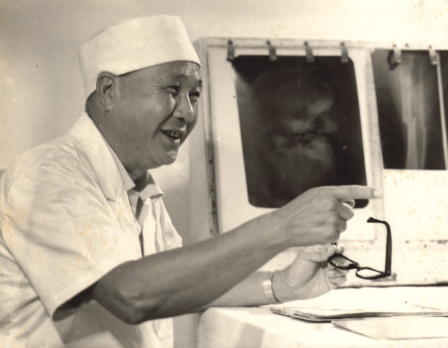
Caption: Patient education is important when there are concerns about statin associated symptoms. ( Photo for the remembrance of Dr. Lin Yi-Xian, as well as his reverenced predecessor-physicians at Beihai Puren Hospital, missioned with the spirit of universal benevolence, pioneered by Dr. E.G. Horder of United Kingdom in 1885)
A scenario in real life – When side effects occur, statin treatment was abandoned quickly. This immature response will render a patient with increased the risk of heart attack and stroke.
A lady had a LDL cholesterol of 220mg/dL ( 5.1 mmol/L, her family physician had her start a statin, 40mg atorvastatin. She had body ache after a few months later. After she complained about her body ache, her physician replaced the statin with 10mg ezetimibe, which is a non-statin LDL cholesterol lowering medication. Ezetimibe does not have the side effect of muscle symptoms. The bothersome issue was resolved, and the patient was pleased with her physician’s brisk decision. Switching from a statin to the very well tolerated drug ezetimibe is a very common solution seen in medical practice. However, the benefits of reducing the risks of cardiovascular events like stroke or cardia infarction that ezetimibe possesses is far too moderate in comparison with statins. The recommended approach is that 2 or more different statins should be tried before switching to a non-statin LDL lowering drug. In statin therapy, lack of education for patients to address the muscle side effects leads to therapy discontinuation, as indicated by a survey study (Ref.Natalie Ward). The patients’ risks of heart attacks and strokes increase as a result. Patients of non-adherence to statins due to side effects have had 36% increase in recurrent myocardial infarction and a 43% increase in coronary heart disease event compared with high statin adherence patients. (Ref. Natalie Ward).
Statin intolerance can be categorized into statin true intolerance and statin pseudo-intolerance (or partial intolerance). 90 % of patients described as statin intolerance are statin pseudo intolerance. They experience muscle symptoms when starting a statin, but are able to continue statin therapy as symptoms subside.
The proven benefits of Statins in preventing cardiovascular diseases and extending life, excellent safety profiles have earned statins the praise as one of the greatest therapeutic advances in modern medicine. Like any other great achievements. Statins have endured intensive questioning about their safety during the first ten years after FDA approval since1987. Although all issues of challenging the safety of statins have been resolved long ago with fairly clear answers through myriad of clinical investigations, three main concerns remain lingering among patients. . They are the statin related risks of diabetes, liver injury and muscle injury. The issue of statin associated diabetes has been discussed in my previous blog. The statin associated liver injury has low clinical significance, although patients may be overly concerned if they have elevation of liver enzymes in lab tests. By comparison, Statin associated muscle symptoms (SAMS) are more commonly experienced by patients.. Of patients treated with statins, up to 15% reported the experience of muscle side effects, 9% discontinue statin therapy. However, only 1% of them are found to be statin truce intolerance. True statin intolerance is defined as the inability to tolerate at least 2 different statins, 1 statin at the recommended average daily dose and the other statin at any dose or frequency. A patient diagnosed with statin truce intolerance has to take a non-statin cholesterol lowering drug for reducing her risk of heart attack or stroke. In math, the other 8% of patients experienced statin-associated muscle symptoms, those patients should be able to continue their statin therapy as symptoms subside in times, or after an adjustment of treatment. If allowed, I like to term this subgroup as statin pseudo-intolerance, in order to differentiate it from true statin intolerance.
What is statin intolerance? Both statin associated symptoms and statin benefits to reduce CV risks are dose-dependent. To achieve the maximum benefits, the choice of highest tolerable dosage of a statin is essential.
When the subgroup of true statin intolerance identified from those initially defined as statin intolerance, the remaining actually become able tolerate a statin, which needs a term – statin pseudo intolerance for this remaining subgroup. Statin intolerance occurs due to statin-associated muscle symptoms (SAMS). They are described as myalgia, myositis and rhabdomyolysis according to the symptom severity. When muscle tissues are injured, Creatine Kinase (CK) releases from the muscle tissue to blood circulation and excreted through urine. The elevation of creatine kinase levels indicates the severity of muscle injury. Symptoms of myalgia are muscle weakness, muscle cramp and muscle pain, but without elevation of creatine kinase. Majority of statin related muscle side effects are myalgia. Myositis and rhabdamyalysis are very rare, the occurrence rates are 0.1% . In addition to muscle symptoms, myositis is indicated with mild elevation of creatine kinase 4-8 times of upper limit of normal (ULN =198 units/L). When a creatine kinase level is 10 times higher than the upper limit of normal, the diagnosis of rhabdamyolysis is considered. With such high creatine kinase levels, brown urine and urinary myoglobin are usually manifested.
Some key facts:
- Although several mechanisms have been proposed, how a statin cause muscle injury is still not clear. Without knowing the mechanism, some questions from a patient may not have a convincing answer when she was advised to continue statin therapy while she was having muscle symptoms. For example, “Will my muscle weakness and ache be improved later as I continue my statin?” Why do I have the muscle pain if my muscle is not injured by a statin as you are telling me?”….. Addressing risk factors of statin-associated muscle symptoms provides answers, but sometimes fall short.
- An approach of statin re-challenge is applied to diagnose a patient of a true statin intolerance, so the patient should be treated with non-statin drugs. Other patients of statin pseudo-intolerance should continue the statin recommended from the approach protocol.
- Statin-associated muscle symptoms (actually all statin side effects) are dose-dependent. At high dosage, the probability and severity of muscle side effects are higher. Clinical trials have reported that at low to moderate dosages, the incident rate of statin associated muscle symptoms is similar to placebo. At high dosage, the incident rate is 5 to 18% ( Ref Law M, Rudnicka) .
- The benefit of statin in reducing the risk of heart attacks is also dose –dependent. Higher the dosage of statin is, the more reduction of risks of atherosclerotic cardiovascular events is achieved. The guide lines set a goal of 50% LDL reduction (or target of less than 50mg/dL) for high risk patients. You will not able to achieve this target with low dosage of a statin.
- Risk factors of statin intolerance is a manner of dose-dependent. Some people, who possess risk factors, such as those aged above 70 or hypothyroid, and others are prone to experience muscle symptoms from a statin. All the risk factors are linked to the higher amount of statin accumulated in our body system. The low metabolism rates of older people or hypothyroidism lead to such a statin accumulation. It seems a common sense to have the adjustment of a statin dosage for a patient with a risk factor.
Statin associated liver side effects
Statins are primarily metabolized in liver. Therefore, they are also associated with elevation of liver enzymes. Alanine aminotransferase (ALT) ,aspartate aminotransferase (AST) or gamma-glutamyl transpeptidase (GGT) are usually measured in lab test for liver functions. When liver cells are injured, those enzymes are released into blood stream, and their elevation occurs. Showed in many studies, statins at low or moderate dosages (or half of the labeled maximum dosages) are not associated with clinically significant elevation of those liver enzymes. Clinical significance is considered when the levels of those enzymes are higher than 3 times the upper limit of normal (ULN). For example, the ULN of alanine aminotransferase (ALT) is less than 34 U/L for men, 24 U/L for women. Moderate increases of those transferase levels have been observed when patients were given statins at maximum dosages (such as 80 mg atorvastatin). These elevations in majority of cases will gradually decline back to normal as statin therapy continues. Liver injury in statin therapy was initially in late 1980s a concerned by FDA. Then, a periodic test of liver function was required. In 2012, FDA recommended liver function test soon after start of statin therapy, no further tests needed if all are normal, because of the fact that severe liver toxicity of a statin is very low at occurring rate of 0.001%. (Ref. Lemp). Later years, comments appeared in research articles like “Though the liver function test is recommended by FDA, it is unnecessary in normal situation”. It is a picture that liver injury in a statin therapy is less concerned than muscle symptoms.
Not able to follow treatment recommendations, why? As a patient, if we have better understandings of statin side effects, our physicians can apply the “Shared Decision Making” strategy more effectively for optimizing our health benefits.
Because of the evidences of beneficial superiority in reduction of CV events, Statins have been the top choice in LDL lowering treatment. People having the risk of atherosclerotic cardiovascular disease are recommended to be on statin therapy for life time. In case of suspected statin intolerance, physicians need to identify and modify risk factors of muscle symptoms. Also a physician needs to follow a approach of statin re-challenge before considering a non-statin LDL lowering drug (Guild line of AAC, 2013). However, it is easy to say than do.
From the perspective of a physician, the recommended approach consists of onerous monitoring of muscle symptoms, several clinical office visits. In addition to the burden for his patient, possible complain of re-occurrence of muscle symptoms after months’ effects is by no mean a pleasure for a physician. Why bothered, then. Switching to the non-statin drug ezetimibe brushes those troubles right away.
The repertoire of a patient toward statin-associated muscle symptoms exerts great influence on her physician’s decision. Lack of understandings of statins’ benefits is another cause of discontinuing a statin. This should be particularly true for patients in primary prevention. Without a previous event of heart attack or stroke, without symptoms, a patient may look at her report of high LDL level –nothing more than the numbers on papers. If after using the tool of “The ASCVD risk Estimator Plus”, she understood her risk of first occurrence of stroke within 10 years (Link) is 25 % probability, her current statin therapy could cut the risk to 12%, this patient would probably think more than twice before stop her statin. Trashy articles with frightening headlines, such as “Taking Statins can melt your muscles!” loom in internet media to scare people off statin therapy.
Those are a few numbers of causes contributing the abandoning statin therapy by those patients of statin pseudo-intolerance. Those are the causes of the barriers for statin adherence. They can be overcome by good communications between a physician and his patient.
Interim Comment – This writing will be followed by a second part in the related subject “When I have muscle pain after starting statin therapy….”
Having gone through more than a dozen of articles pertinent to the topic of statin intolerance, I have not seen any rhetoric of blaming patients for their own irresponsibility of discontinuing statin therapy. The core ethic of medical professionals—empathy is gracefully manifested. On contrary, the comments of criticizing some physicians who abandoned statin therapy too quickly as muscle symptoms just emerge, as well as the comments of appealing physicians to follow the “take your time” approach,” step by step” management of statin associated muscle symptoms, are ubiquitous. The following is a quote from Expert Analysis of American College of Cardiology: “Most experts strongly emphasized that a careful step-by step approach allows for 90% of patient reporting statin-related adverse-effects to continue statins”. The ultimate goal of all tedious steps is to maximally protect us from heart attacks, stroke or death. When we have some ideas about how to achieve this goal, statin therapy will be even more successful, without a doubt.
Key Reference:
An Evidence-Based Guideline for Treating Dyslipidemia in Statin-Intolerant Patients Dylan Lempp; The Journal for Nurse Practitioners Vol 17, Issue 8, September 2021, Pages 910-915
Association Between Lowering LDL-C and Cardiovascular Risk Reduction Among Different Therapeutic Interventions–A Systematic Review and Meta-analysis; Michael G. Silverman et al. JAMA. 2016;316(12):1289-1297. doi:10.1001/jama.2016.13985
Statin Intolerance: Not a Myth – Expert Analysis. www.acc.org/latest-in-cardiology/articles/2015/08/11
Considerations for Safe Use of Statins: Liver Enzyme Abnormalities and Muscle Toxicity , R. CLARK GILLETT, et al. Am Fam Physician. 2011, 83(6):711
Statin safety: a systematic review. Law M, Rudnicka AR. Am J Cardiol. 2006;97(8A):52C-60C.
Statin Toxicity- Mechanistic Insights and Clinical implications. Natalie C. ward et al. Circulation Research,2019, 124:328
 PurenHealthInfo.com