• Editor’s commentary
• FDA chief’s interview conversation
Editor’s commentary on CBS interview conversation with FDA chief Dr. Markary
A black box warning had been labeled in all estrogen medications for the past 23 years. It warned doctors and patient whoever considered estrogen hormone therapy carrying severe adverse effects, highlighting risks like endometrial cancer, cardiovascular disorders (stroke, heart attack, blood clots), breast cancer, and probable dementia. On November 10, 2025, this black box warning has been removed by FDA. In an interview with CBS in November 2025, the FDA chief, Dr. Makary, criticized this black box warning on estrogen medications: “It’s an American tragedy. I do think it’s one of the biggest mistakes in modern medicine.”
In my previous blog published in September 2025, in a topic as “I Need Your Help: Tell the FDA They Are Wrong About Estrogen”, I transcribed a video speech of Dr. Rubin, a medical expert on estrogen therapy. In her speech, Dr. Rubin appealed all US medical doctors ring out their opinions to FDA, to remove this black box warning. As a result, three months later, the warning was removed.
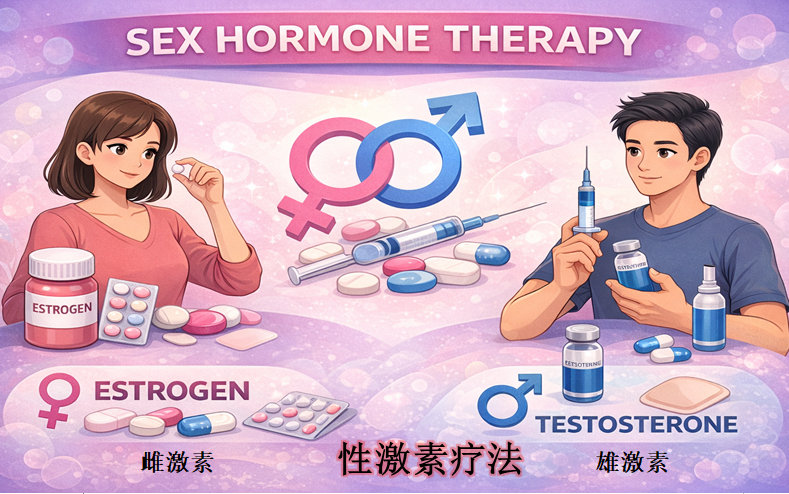
Estrogen is a female sex hormone. Testosterone is male sex hormone. Sex hormones are fascinating substances in our bodies. In ancient times, at the absence of science, very little or no attempts, as far as I know (very limited), were made to explain why males and females are attracted to each other, even on philosophical basis. Except for Greek mythology, more than 3000 years ago, it tried to explain: Eros, the god of love and desire, breathed a surreptitious urge into all living beings, the urge was called “Desire”. Having the “Desire”, male and female came together and they mated”. What is the surreptitious urge? It is the sex hormones in my opinion. In modern time, science shows the levels of sex hormone in our bodies are closely correlated with the different phases of our lives. In general, little babies have low levels of sex hormones, young people, strong and beautiful, have high levels of sex hormones, old folks, with all the aging signs, have low level of sex hormones. Therefore, a basic question was asked like this, are we aging because we are lack of sex hormones in our bodies? If the answer is “Yes”, could we raise the levels of sex hormones by taking medicines containing sex hormones, then we might become young and beautiful again? This is the basic concept for Hormone Replacement Therapy for anti-aging purpose. The pursuit of being young and beautiful has never been a legitimate indication from any medication. However, estrogen, the female sex hormone, has been proven effective in treatment of various conditions of women’s health. Estrogen has long been used for treating menopausal symptoms. Its benefits for other morbidities of women’s health has been summarized in the recent FDA website states, quoted as follow : “ Studies have provided evidence that starting HRT within ten years of the onset of menopause can have numerous benefits which for most women outweigh potential risks. Benefits include a reduced risk of all-cause mortality and fractures. HRT has also been associated with 50% reduction in heart attack risk, 64% reduction in cognitive decline, and 35% lower risk of Alzheimer’s. “ ( FACT SHEET: FDA Initiates Removal of “Black Box” Warnings from Menopausal Hormone Replacement Therapy Products – Nov. 10,2025 https://www.hhs.gov/press-room/fact-sheet-fda-initiates-removal-of-black-box-warnings-from-menopausal-hormone-replacement-therapy-products.html ) .
For the past 23 years, those medical benefits of estrogen hormone therapy were massively shadowed by the reported risks primarily based on the clinical study of Women’s Health Initiative in 2002. Take a look at what was said in the black box warning, one would have been out of her mind if she still wanted taking the estrogen medication. Now, the stance of FDA is changed. Through the reading of the transcript of the FDA chief’s interview, we now know Dr. Makary has long been a critic of this warning box and the study of Women’s Health Initiative. In addition to the criticisms such as “ exaggerated risks”, “overweight risks over benefits” , “ unbalanced age groups studied” etc., the estrogen type used in the Women’s Health Initiative is Premarin, conjugated estrogens processed from horse urine. Numerous clinical studies have showed conjugated estrogens possess more severe risks then bioidentical estrogen, such as estradiol. That is to say: conjugated estrogens possess risks that estradiol does not. One example is that “ Estradiol , but not Premarin, preserves Key brain regions in postmenopausal women at risk for dementia “ (Women’s Health Stanford Medicine New Center March 12,2014). Studies show Premarin can double the risk of venous thromboembolism (blood clots in legs or lungs) compared to estradiol. While both can increase risk 。Bioidentical estrogen means its chemical structure same as the estrogen that our body produce. Therefore, it could be rationally reasoned that pharmacological actions and metabolism pathway of estradiol is the same as endogenous estrogen, simulating physiological phenomenon. High level of sex hormones in our youth is physiological phenomenon, were we afraid of it ? No. We enjoyed it.
Estradiol medicines are available many dosage forms, oral pills, injectable, transdermal patches or topical or vaginal creams. For the concern of the risk of blood clots, the answers for my AI inquiry are quoted as following:
“Studies consistently point to oral estradiol increasing VTE risk, while transdermal estradiol is considered a safer option with a neutral effect on blood clot risk, making it preferable for many individuals, notes British Medical Journal and American College of Obstetricians and Gynecologists.
Vaginal Estradiol: Studies suggest low-dose vaginal estradiol for menopausal symptoms is not associated with an increased risk of recurrent vein thrombosis in women with a history of it.
Mechanisms: Oral estrogens go through the liver, boosting clotting factors, while transdermal delivery bypasses the liver, leading to less impact on coagulation.”
There is a theory of beneficial window of age. FDA recommend to start estrogen Hormone Replacement Therapy before 60 years of age, when considering systemic therapy, such as oral pills or injections. One question remains if ladies over age 60 can still benefit from estrogen medicine for long term use.. In its website, FDA states “ Though the starting time of HRT and duration of use are decisions made between the prescriber and the individual patient, the FDA’s labeled recommendation will be to start HRT within 10 years of menopause onset or before 60 years of age for systemic HRT”. My understanding is that the ratio of benefit vs. risk should be individually evaluated by physicians before decision made for ladies age above 60, in addition to the general recommendation before 60. Individualization of medical care is sometimes opaque in the process of decision making. For example, the disclosed 2025 report of health condition from White House ( Link https://www.whitehouse.gov/briefings-statements/2025/04/memorandum-from-the-white-house-physician/) indicated our president is on the medication of rosuvastin, and aspirin. Our president has a perfect lipid panel at 79, all cholesterol levels could not be better, His health condition in report seems great without risk factors. Both medicines in his regimen are not in agreement with the USPSTF guideline, which is that statin therapy for primary prevention of cardiovascular disease (CVD) is recommended for adults aged 40 to 75 years with no prior history of heart diseases. In another word, statins is no recommended for a 79 year age for primary prevention of CAD. 325 mg of Aspirin is so aggressive that it became a topic of discussion in National Public Radio. The ratio of benefit / risk is the key. The risk of statin therapy is plausibly close to zero, the lower percentage of benefit for age 79 compared to 40—75 is totally not a dismissible benefit of reducing the possibility of heart attach/stroke. We all should understand this logical rational, Hormone Therapy is not an exception.
Vaginal estrogen cream should be recommended through life span, according the FDA adviser on Estrogen, Dr. Rubin,“Estrogen cream prevents urinary tract infections as long as they use it — till death do they part.” ( see my previous blog “ Tell FDA, They are wrong about Estrogen). “There is no official upper age limit for women using low-dose vaginal estrogen cream”, according this AI answer to my inquiry.
Unlike many sensational news of medical research breakthrough, merely illustrating pictures of mirages, Hormone Therapy has been available as medical treatment and disease prevention for more than decades of years. While cautions for starting Hormone therapy remain just like any medicine, removal of the black box warning from estrogen therapy will help millions of women overcome the fear, be able to seek the proven health benefits. The removal of the black box warning is a triumph of crashing the dogma, and “because the dogma”, FDA chief denounced, “ 50 to 70 million women over the past 23 years have been denied the incredible, life-changing, life-saving benefits of hormone replacement therapy”. For people’s health, Dr. Markary’s courage to challenge the dogma is immensely admirable.
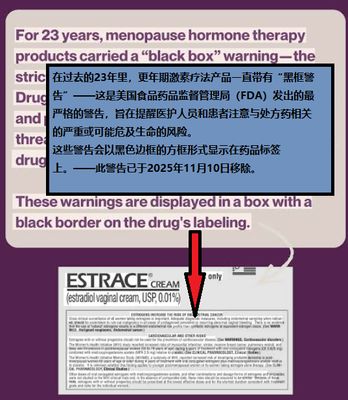
FDA chief says warning labels deterred women from using menopause hormone therapy: “It’s an American tragedy”
By Norah O’Donnell, Sara Moniuszko, Julie Morse, Callie Teitelbaum, Jenna Gibson Riggins
Updated on: November 10, 2025 / 8:48 AM EST / CBS News
The U.S. Food and Drug Administration will remove the “black box” warning labels on many hormone therapy drugs used for menopause and perimenopause symptoms — a major turnaround that’s likely to encourage more women to seek treatment. FDA Commissioner Dr. Marty Makary said in an exclusive CBS News interview that the change ends a decades-long “fear machine,” and he called the demonization of menopause hormone therapy, also known as hormone replacement therapy (HRT), “an American tragedy.”
“With the exception of vaccines or antibiotics, there’s no medication that can improve the health of women on a population level more than hormone replacement therapy,” Makary told senior correspondent Norah O’Donnell, explaining that studies show that menopause hormone therapy can reduce the risk of heart attacks, the leading cause of death in women.
The products affected by this change include medicines containing both estrogen and progesterone, systemic estrogen and topical estrogen.
The “black box” warning labels were based on what many experts now consider flawed research on HRT from more than 20 years ago. Part of the criticism is that back in 2002, researchers on the Women’s Health Initiative study overstated the risks of breast cancer because the data focused on older women.
More recent studies have shown the benefits outweigh the risk for many women if hormone therapy is used in the early years of menopause, before the age of 60.
“We now have a more nuanced understanding, and we want to put that fear machine in its proper context and let people know that there are tremendous long-term health benefits,” Makary said.
In addition to heart health, those benefits include lowering the risk of cognitive decline or Alzheimer’s and preventing osteoporosis, a major factor in hip fractures.
Hormone therapy can help ease menopause symptoms, which can be debilitating, taking both a mental and physical toll. There are a wide range of symptoms, including hot flashes, insomnia, night sweats, mood swings, joint pain, weight gain and more — with some experiencing more intense effects than others.
Menopause typically occurs in a woman’s late 40s or early 50s, when the ovaries produce less estrogen and menstruation stops. Perimenopause refers to the transitional years leading up to it.
What studies say now
Over the past two decades, fears about breast cancer led doctors to steer millions of women away from hormone therapy.
“It’s an American tragedy. I do think it’s one of the biggest mistakes in modern medicine,” Makary said, denouncing the “groupthink” among doctors in the wake of the 2002 study.
As a result, he told CBS News, “50 to 70 million women over the last 23 years have been denied the incredible, life-changing, life-saving benefits of hormone replacement therapy because of the dogma.”
Those millions, he said, included his own mother.
“She had gone through perimenopause right around that time, but [was] never offered this therapy,” even though she was a good candidate for it. “Well, she went on to have two different falls recently where she had bone fractures. … And I can’t help but think if her bones had been stronger from hormone replacement therapy, she wouldn’t have gone through that.”
Menopause significantly speeds bone loss and increases the risk of osteoporosis, according to the Endocrine Society, an international medical organization. The group says 1 in 2 postmenopausal women will have osteoporosis, and most will suffer a bone fracture during their lifetime, which can lead to a cascade of other health problems.
Markary added he knows breast cancer is a sensitive topic that needs to be treated very carefully, but said no clinical trial has ever shown that hormone therapy increases a woman’s risk of dying from breast cancer.
One of the things scientists have learned, he said, is that hormone therapy is best started soon after a woman’s body stops producing estrogen.
“Hormone replacement therapy for postmenopausal women needs to be started within 10 years of the onset of menopause or perimenopause, and generally, the rule of thumb is not to start it after age 60,” Makary said. After around 60, aging and lack of estrogen mean blood vessels have begun to harden and narrow, raising the risk of stroke and heart attack; taking estrogen earlier can help prevent that.
Women should discuss the best options with their doctor.
“Look, I’m a regulator. I don’t want to tell people what to take. And I’m not prescribing anything,” Makary said. “But we want people to have the right information. And part of that is addressing this fear machine that has been going on for 23 years, that has been magnified by the FDA’s ‘black box’ warning on estrogen products for perimenopausal women.”
Non-hormonal therapy treatments
While hormone therapy is the most effective treatment for hot flashes and night sweats, it is not suitable for everyone, especially women with a history of breast cancer.
Earlier this month, the FDA approved a new, non-hormonal option called Lynkuet, known generically as elinzanetant. The drug is the second medication to directly target the brain pathways involved in body temperature control. The first, called Veozah, was approved in 2023.
Despite how common menopause is, research funding to study it has historically been limited.
Even medical education on the topic has been limited, Markary said.
“The general philosophy was, why are we teaching about this, about menopause? Because there’s nothing we can do for it,” he said. “Well, that dogma, unfortunately, resulted in a lot of omission of menopause in medical education.”
But, with more women in the field, that’s starting to change.
“It’s been a male-dominated culture in the medical establishment, historically. Now, roughly half of our medical students at Johns Hopkins were women, and that’s a trend nationwide,” Markary said. “And they’re starting to say, ‘Hey, wait a minute, this is something where women are coming to their doctors and they’re not getting the right answer.'”
 PurenHealthInfo.com